Boost Impact: Nonprofit Consulting Services US
nonprofit consulting services US

Boost Impact: Nonprofit Consulting Services US

Unlock your organization's full potential with tailored strategic guidance and operational expertise from leading US nonprofit consultants.

Discover Your Potential

Key Takeaways

  • ✓ Over 1.8 million nonprofits operate in the US, contributing significantly to the economy and society.
  • ✓ Nonprofit consulting helps organizations overcome challenges in fundraising, governance, and strategic planning.
  • ✓ The US nonprofit sector employs over 12 million people, making it the third-largest employer.
  • ✓ Specialized consultants can provide expertise in areas like grant writing, board development, and impact measurement.

How It Works

1
Initial Needs Assessment

We begin by thoroughly understanding your organization's mission, current challenges, and long-term aspirations. This involves detailed discussions and data review to pinpoint key areas for improvement.

2
Customized Strategy Development

Based on the assessment, our consultants craft a bespoke strategic plan designed to address your specific needs and achieve your goals. This plan outlines actionable steps, timelines, and measurable outcomes.

3
Implementation & Support

We work alongside your team to implement the developed strategies, providing guidance, training, and resources. Our support ensures a smooth transition and effective execution of new initiatives.

4
Evaluation & Sustained Growth

Regularly monitoring progress and evaluating the impact of implemented strategies is crucial. We help establish metrics for success and ensure your organization is equipped for sustained growth and continuous improvement.

The Critical Role of Nonprofit Consulting Services in the US Landscape

Volunteers gather beside a van to prepare and distribute food supplies outdoors. Photo: RDNE Stock project / Pexels
The landscape for nonprofit organizations in the United States is dynamic, complex, and increasingly competitive. While driven by noble missions and dedicated individuals, nonprofits often grapple with a myriad of challenges, from securing sustainable funding and navigating intricate regulatory frameworks to optimizing operational efficiency and measuring true impact. It's in this intricate environment that expert nonprofit consulting services US become not just beneficial, but often essential for survival and growth. These specialized services provide external, objective expertise that internal teams may lack due to resource constraints, time limitations, or a need for a fresh perspective. Unlike for-profit businesses, nonprofits operate with a dual bottom line: financial sustainability and mission achievement. This unique structure demands a highly specialized approach to strategy, fundraising, governance, and program delivery. Consultants bring a wealth of experience gained from working with diverse organizations across various sectors and sizes. They arrive equipped with best practices, innovative solutions, and a deep understanding of the unique challenges and opportunities within the nonprofit sphere. For instance, a small community-based organization might struggle with developing a robust fundraising strategy beyond annual appeals, while a larger foundation might face hurdles in optimizing its grant-making process or board engagement. In both scenarios, a consulting firm specializing in nonprofits can offer tailored solutions. They can help identify new funding streams, implement modern donor management systems, develop compelling grant proposals, or restructure governance models to enhance effectiveness and accountability. The value extends beyond immediate problem-solving; consultants often build capacity within the organization, empowering staff and board members with new skills and knowledge that foster long-term resilience. Furthermore, the regulatory environment for nonprofits in the US is constantly evolving. Compliance with IRS regulations, state-specific requirements, and ethical fundraising standards can be daunting. Consultants who stay abreast of these changes can guide organizations through complex legal and ethical landscapes, ensuring adherence and mitigating risks. This proactive approach not only safeguards the organization's reputation but also secures its tax-exempt status, which is fundamental to its operation. Beyond compliance, consultants assist in strategic planning, helping organizations articulate their vision, define clear objectives, and develop actionable plans to achieve them. This often involves conducting thorough organizational assessments, stakeholder interviews, and market analyses to inform strategic decisions. The ultimate goal is to enhance the organization's ability to fulfill its mission more effectively, efficiently, and sustainably, making a greater positive impact on the communities they serve.

Strategic Pillars: How Nonprofit Consulting Drives Growth and Efficiency

Close-up of charity boxes labeled for donation, featuring medicine and colorful paper cups. Photo: RDNE Stock project / Pexels
Nonprofit consulting services in the US are typically structured around several strategic pillars, each designed to address critical aspects of organizational health and mission effectiveness. Understanding these pillars helps organizations identify where external expertise can provide the most significant uplift. One of the foremost areas is strategic planning. Many nonprofits operate day-to-day without a clear, long-term roadmap. Consultants facilitate comprehensive strategic planning processes that involve stakeholders from all levels, leading to a well-defined vision, mission refinement, clear goals, and measurable objectives. This process often includes environmental scans, SWOT analyses, and competitive benchmarking, ensuring the strategy is both ambitious and achievable. A robust strategic plan serves as a guiding document, aligning all efforts towards a common purpose and enabling more effective resource allocation. Another crucial pillar is fundraising and development. Sustainable funding is the lifeblood of any nonprofit. Consultants in this area specialize in diversifying revenue streams, developing major gift programs, crafting compelling grant proposals, designing capital campaigns, and optimizing annual giving strategies. They can also assist with prospect research, donor cultivation, and the implementation of sophisticated donor management systems. Their expertise can transform an organization's fundraising efforts from reactive to proactive, ensuring long-term financial stability. This is particularly vital in a competitive philanthropic landscape where donors increasingly demand transparency and demonstrable impact. Effective fundraising consulting doesn't just raise money; it builds lasting relationships with supporters who believe in the mission. Organizational development and governance form another critical pillar. This encompasses everything from board development and executive leadership coaching to internal operational efficiency and human resources strategies. Consultants help organizations build high-performing boards that are engaged, diverse, and strategically focused. They can assist in defining board roles and responsibilities, developing effective meeting structures, and recruiting new, impactful members. On the operational front, they analyze workflows, identify bottlenecks, and recommend process improvements to enhance efficiency and reduce administrative burdens. This might involve implementing new technologies, optimizing communication channels, or developing robust performance management systems. By strengthening internal structures and leadership, organizations are better positioned to execute their mission effectively and adapt to changing environments. Finally, impact measurement and evaluation is a growing area of focus. Donors, grantmakers, and beneficiaries increasingly demand evidence of impact. Nonprofit consultants help organizations develop robust frameworks for measuring their social return on investment (SROI), program effectiveness, and overall impact. This involves defining clear indicators, collecting relevant data, and analyzing results to tell a compelling story of change. Effective impact measurement not only satisfies external stakeholders but also provides valuable internal insights for program improvement and strategic adjustments. By demonstrating tangible results, nonprofits can strengthen their case for support, attract new partners, and ultimately amplify their positive influence in the world. These interconnected pillars collectively contribute to a stronger, more resilient, and more impactful nonprofit sector in the US.

Choosing the Right Nonprofit Consulting Services: A Guide for US Organizations
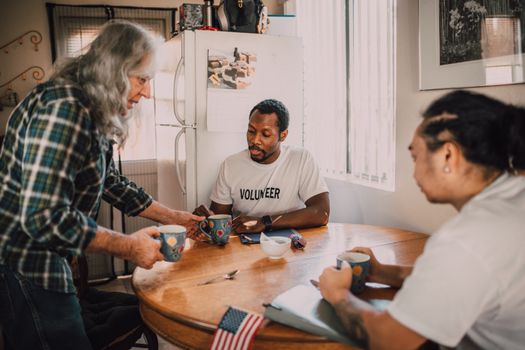
Three volunteers sharing coffee and ideas in a cozy kitchen setting, promoting community engagement. Photo: RDNE Stock project / Pexels
Selecting the appropriate nonprofit consulting services US is a critical decision that can profoundly influence an organization's future trajectory. It's not merely about finding a consultant, but finding the *right* consultant whose expertise, values, and approach align with your organization's unique needs and culture. The first step involves a thorough internal assessment to clearly define the problem or opportunity you're trying to address. Is it a fundraising slump? A need for a new strategic plan? Board dysfunction? Operational inefficiencies? A clear understanding of your pain points will help you narrow down the field of potential consultants. Once needs are identified, research is paramount. Look for consulting firms or independent consultants with a proven track record specifically within the nonprofit sector. General business consultants may have valuable skills, but the nuances of nonprofit operations, funding, and governance require specialized knowledge. Scrutinize their past projects, client testimonials, and case studies. Do they have experience with organizations of your size and mission focus? For instance, a consultant specializing in large healthcare systems might not be the best fit for a small arts education charity, and vice-versa. Pay close attention to their understanding of the US nonprofit regulatory environment and philanthropic landscape. Beyond experience, consider their approach and methodology. Do they offer a collaborative process that involves your staff and board, or do they prefer a top-down approach? The most effective consulting engagements foster knowledge transfer and build internal capacity, leaving your organization stronger long after the project concludes. Request proposals from several qualified candidates. A good proposal should clearly outline the scope of work, methodology, deliverables, timeline, and fee structure. Be wary of proposals that are vague or overly generic. It's also crucial to check references. Speak directly with previous clients to gain insights into the consultant's communication style, problem-solving abilities, and overall effectiveness. Ask about challenges encountered and how they were resolved. Finally, chemistry and cultural fit are often underestimated but vital factors. You will be working closely with these individuals, so a good rapport and mutual respect are essential for a successful partnership. Consider conducting initial interviews or introductory meetings to assess this fit. A consultant who truly understands and empathizes with your mission, even if they're an external party, will be far more effective in guiding your organization towards its goals. Remember, this is an investment in your organization's future, and a thoughtful selection process will yield the greatest return in terms of enhanced impact and sustainable growth.

Avoiding Common Pitfalls and Maximizing Your Consulting Investment

A person writing a website creation mindmap on a whiteboard during a business meeting. Photo: Diva Plavalaguna / Pexels
Engaging nonprofit consulting services US can be a transformative experience, but only if approached strategically. There are several common pitfalls that organizations should be aware of to ensure they maximize their investment and achieve desired outcomes. One major mistake is failing to clearly define the problem or desired outcome before engaging a consultant. Without a precise scope, projects can drift, leading to budget overruns and unsatisfactory results. It’s crucial to invest time upfront in articulating what success looks like. Another pitfall is underestimating the internal resources required. While consultants bring external expertise, successful projects demand significant engagement from the client organization. Staff time will be needed for meetings, data collection, feedback, and ultimately, implementation. If internal capacity is already stretched thin, the project's success can be jeopardized. Ensure key stakeholders are available and committed to the process. Here are some critical tips for maximizing your consulting investment: * **Define Clear Objectives and KPIs:** Before signing a contract, establish specific, measurable, achievable, relevant, and time-bound (SMART) objectives. How will you measure the success of the consulting engagement? This provides a benchmark for evaluation. * **Foster Open Communication:** Maintain regular, transparent communication with your consultant. Share all relevant information, even if it seems sensitive. Open dialogue prevents misunderstandings and allows for timely adjustments. * **Involve Key Stakeholders:** Ensure that board members, executive leadership, and relevant staff are involved at appropriate stages. Their buy-in and input are crucial for successful implementation and adoption of new strategies. * **Focus on Knowledge Transfer:** A good consultant doesn't just solve problems; they empower your team. Look for opportunities for learning and capacity building throughout the engagement, ensuring your organization can sustain improvements independently. * **Plan for Implementation:** The consulting report is not the end goal; implementation is. Develop a clear action plan post-consulting engagement, assigning responsibilities and timelines for executing recommendations. * **Evaluate and Adjust:** Regularly review progress against your KPIs. Be prepared to make adjustments to the plan as circumstances evolve or new insights emerge. The consulting process should be iterative. By proactively addressing these areas, nonprofits can significantly increase the likelihood of a successful and impactful consulting engagement, leading to sustainable growth and amplified mission fulfillment.

Comparison

FeatureStrategic Consulting FirmIndependent ConsultantInternal Staff (DIY)
Breadth of ExpertiseVery High (team of specialists)High (individual expertise)Variable (depends on staff)
CostHigherModerateLowest (opportunity cost)
Objectivity/External ViewExcellentExcellentLimited
Capacity BuildingStrong (via structured engagement)Good (mentorship)Implicit
Access to Best PracticesExtensive (cross-sector)Good (individual network)Limited
Implementation SupportOften included/optionalVariableRequires existing capacity
Time to ImpactFaster (structured process)ModerateSlower (learning curve)
Long-Term Partnership

What Readers Say

"Our small arts nonprofit desperately needed a strategic overhaul. The nonprofit consulting services US we engaged provided clear, actionable steps that revitalized our board engagement and diversified our funding streams. Truly exceptional guidance."

Sarah Chen · Boston, MA

"We were struggling with donor retention. The consultants helped us implement a new CRM and develop a personalized donor communication strategy. Our retention rates improved by 15% within the first year, a game-changer for our mission."

David Ramirez · Austin, TX

"Our foundation needed to refine its grant-making process. The nonprofit consulting services US team streamlined our application and reporting, reducing administrative burden by 30% and allowing us to focus more on impact. Highly recommend their efficiency expertise."

Maria Lopez · Chicago, IL

"While the strategic plan was insightful and thorough, the implementation phase required more internal resources than we initially anticipated. However, the outcomes have been overwhelmingly positive, and we're seeing tangible progress towards our long-term goals."

John Smith · Denver, CO

"As a new executive director, navigating the complexities of nonprofit management felt daunting. The governance and leadership coaching provided by our nonprofit consulting services US partner was invaluable, empowering me to lead with confidence and clarity."

Emily White · Seattle, WA

Frequently Asked Questions

What types of nonprofit consulting services are most commonly sought in the US?

The most commonly sought nonprofit consulting services in the US include strategic planning, fundraising and development, board governance, organizational development, and program evaluation. Organizations often seek expertise to address challenges in securing sustainable funding, enhancing operational efficiency, strengthening leadership, and demonstrating measurable impact to stakeholders.

Is nonprofit consulting only for large organizations, or can small nonprofits benefit too?

Nonprofit consulting is beneficial for organizations of all sizes. While large nonprofits might engage consultants for complex, multi-year projects, small nonprofits can greatly benefit from targeted engagements, such as developing a first-time strategic plan, improving grant writing skills, or structuring their board. Many consultants offer scaled services to meet diverse organizational needs and budgets.

How do I choose the best nonprofit consulting services US for my organization?

To choose the best nonprofit consulting services, start by clearly defining your organization's needs and objectives. Then, research consultants with specific experience in the nonprofit sector and your mission area. Request proposals, check references, and prioritize firms that demonstrate a strong understanding of your challenges, offer a collaborative approach, and align with your organizational culture and values.

What is the typical cost of nonprofit consulting services in the US?

The cost of nonprofit consulting services in the US varies widely based on the scope of work, duration of the engagement, consultant's experience, and the firm's size. Projects can range from a few thousand dollars for a short-term assessment to tens or hundreds of thousands for comprehensive strategic planning or capital campaigns. Many consultants offer project-based fees, hourly rates, or retainer agreements.

How do nonprofit consulting services differ from general business consulting?

Nonprofit consulting services differ from general business consulting primarily in their understanding of the unique nonprofit ecosystem. They specialize in the dual bottom line (mission and finance), navigate specific regulatory and tax-exempt requirements, and possess expertise in philanthropic funding models, volunteer management, and board governance that are distinct from for-profit environments.

Who should use nonprofit consulting services US?

Any nonprofit organization in the US looking to overcome significant challenges, seize new opportunities, enhance efficiency, secure sustainable funding, strengthen leadership, or maximize its social impact should consider using nonprofit consulting services. This includes organizations facing growth pains, struggling with strategic direction, needing a fundraising boost, or seeking to improve internal operations and governance.

Are there risks associated with hiring nonprofit consulting services?

While highly beneficial, risks include poor consultant-client fit, unclear project scope leading to budget overruns, or a lack of internal capacity to implement recommendations. Mitigate these risks by conducting thorough due diligence, clearly defining deliverables, maintaining open communication, and ensuring internal buy-in and resource allocation for the project.

What are the future trends impacting nonprofit consulting services in the US?

Future trends impacting nonprofit consulting services in the US include an increased focus on data analytics and impact measurement, the integration of technology (AI, CRM) for efficiency, evolving philanthropic models (e.g., impact investing), growing demand for diversity, equity, and inclusion (DEI) expertise, and adaptive strategies for navigating economic uncertainties and political shifts.

Ready to elevate your mission and amplify your impact? Explore how specialized nonprofit consulting services in the US can provide the strategic clarity and operational excellence your organization needs to thrive. Partner with experts who understand your unique challenges and are dedicated to your success.

Topics: nonprofit consulting services USnonprofit strategy consultingfundraising consulting for nonprofitsnonprofit management consultingnonprofit governance consulting
Leo List

DK Escorts LU Escorts AT Escorts SE Escorts FI Escorts CH Escorts DE Escorts HR Escorts IE Escorts GR Escorts CZ Escorts NO Escorts BE Escorts FR Escorts SI Escorts IL Escorts NL Escorts PL Escorts HU Escorts ES Escorts IT Escorts PT Escorts SK Escorts RO Escorts ZA Escorts UY Escorts US Escorts UK Escorts NZ Escorts AU Escorts
Brampton weed
Adultwork EstrelaBet Vai de Bet R7 Bet Betão Galera Bet Rainbet Bet9ja Shop SportyBet BetKing Sisal Loto Foot Hollywoodbets YesPlay Odibets RushBet Jugabet BetWarrior BetCity MSport betPawa Fortebet